What Abacus Competitions Usually Look Like
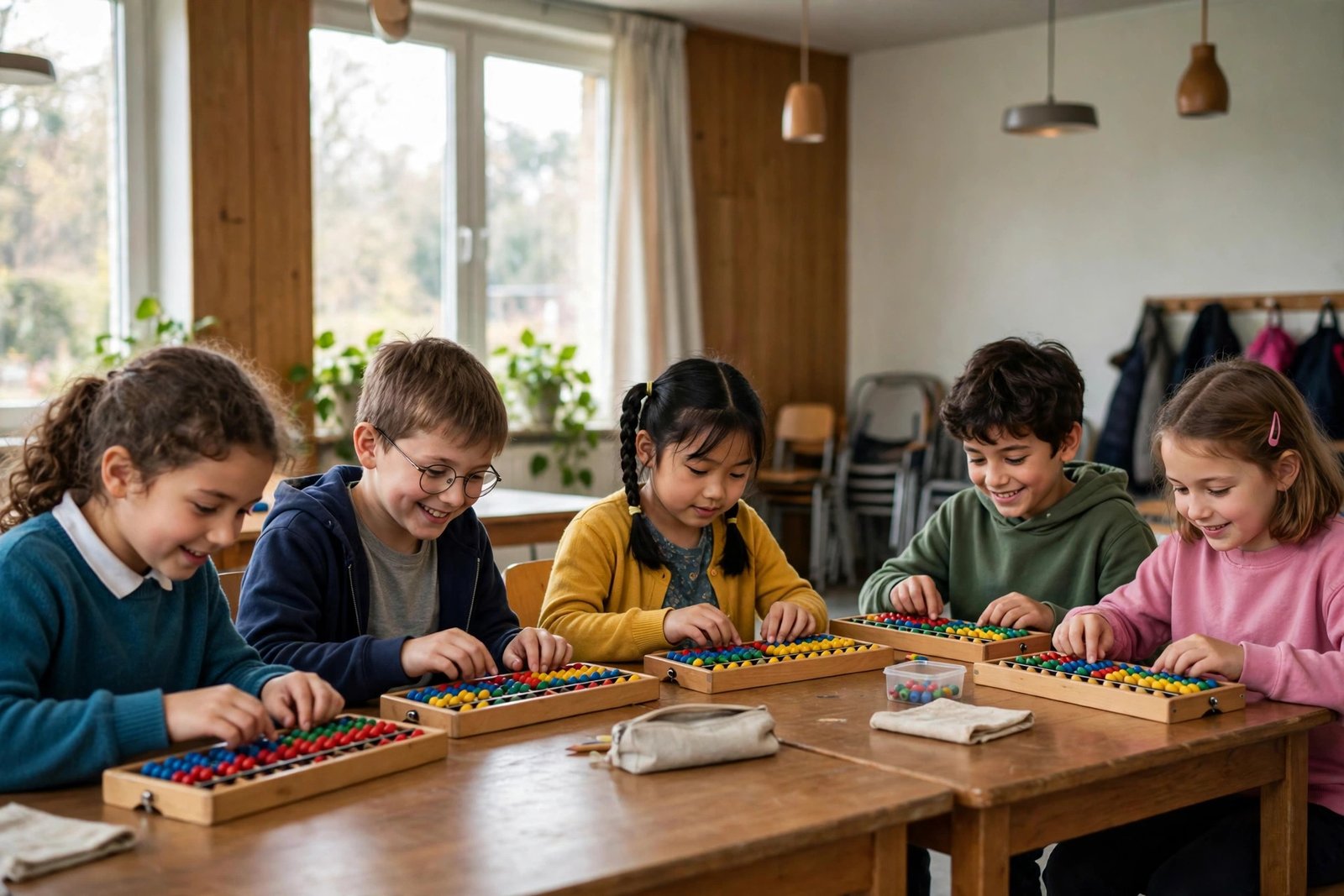
An abacus competition is an organised event where children solve sets of calculations against the clock, either on a physical abacus, by picturing the abacus in their mind, or a mixture of both depending on their level. Events are usually run by training centres or groups of centres, grouped by age or level, and held in a school hall or similar venue with rows of tables and a calm, exam like atmosphere.
Formats vary. Some rounds ask children to complete as many written sums as they can in a set time, others include listening rounds where numbers are read aloud and children must hold them in memory while calculating. Your child’s teacher should explain the exact format of any event you consider, including how long each round lasts, what tools are allowed, and how work is marked.
For many children, the appeal is simple: a goal to work towards, a day that feels special, and a chance to use their skills alongside other children who share the same hobby. Winning is only one possible outcome, and for most families it should not be the main reason to enter.
Is Your Child Ready?
Readiness is about more than speed. A child who knows the required techniques, can work steadily for the length of a round, and can cope with small setbacks without tears is usually ready to try. Ask the teacher directly whether the event matches your child’s current level. A good teacher will sometimes advise waiting, and that advice is worth respecting.
Consider temperament honestly. Some children are energised by a hall full of people and a ticking clock. Others do excellent work in class but freeze under observation. Neither response says anything about ability. If your child is unsure, a smaller internal event or a practice test in class can be a gentler first step before a larger competition.
Also check the basics: can your child sit comfortably, keep their place on a long page of sums, and check simple work? Reviewing common abacus mistakes beginners make together before an event helps children avoid the small slips, such as misreading a row or forgetting to clear the beads, that cost marks under time pressure.
How Preparation Usually Works
Preparation normally means a few weeks of slightly more structured practice: timed sets at the level of the event, listening practice if that round is included, and rehearsal of the practical routine, arriving, finding a seat, clearing the abacus, and starting calmly on the signal. Keep sessions short and regular rather than long and exhausting. The habits behind keeping your child motivated in abacus practice matter even more in competition season, because enthusiasm fades quickly when practice becomes a daily test.
As children progress, many events include mental rounds where the physical beads are put aside. Understanding moving from abacus to mental maths helps parents see why teachers build that skill gradually and why a child should never be pushed into a mental category before the underlying steps are secure.
Protect normal life during preparation. Sleep, play, schoolwork and family time still matter. If practice starts to dominate evenings or your child dreads it, speak to the teacher and reduce the load. A competition is a single day. A child’s relationship with maths lasts for years, and that relationship is worth far more than any single result.
Costs, Travel and Practical Questions to Ask
Ask early about entry fees, travel, arrival time, what to bring, and whether parents watch or wait elsewhere. Some events charge separately for entry, materials or certificates. None of this should come as a surprise on the day. Check what your child should wear, whether food is available, and how long the whole event including results is expected to last.
Ask how results are shared and whether every child receives a certificate or feedback. Events that recognise participation kindly tend to create better memories for beginners. Also ask what happens if your child is unwell on the day. Knowing the answer in advance removes a layer of stress for everyone.
If travel is long, weigh the whole experience honestly. A distant, large event may be exciting for an experienced older child and overwhelming for a young beginner. There will usually be another event closer to home in a later season, and skills keep growing in the meantime, as the timeline in how long it takes to learn abacus explains.
Handling Nerves, Results and the Day Itself
Before and during the day
Keep the morning ordinary: normal breakfast, clothes laid out the night before, abacus and pencils packed early. Talk about the plan for the day rather than the result. Remind your child of one or two practical strategies, such as breathing slowly before the start signal, skipping a stuck sum and returning to it, and checking the first row carefully.
Nerves are normal and even useful in small amounts. Name them plainly if your child feels them. Many children settle once the first round begins and the familiar rhythm of beads takes over. Your calm face at drop off does more than any last minute advice.
After the results
Whether the result brings a trophy or not, start by recognising the effort: preparing, travelling, sitting in a big hall and finishing the rounds are real achievements. If your child is disappointed, let them feel it without rushing to fix it, then look together at what they learned and what they might try next time. Avoid comparing scores with friends or siblings, and be careful with rewards tied only to winning.
If your child wins, celebrate warmly and keep perspective. One event reflects one day’s performance at one level. The children who keep improving over years are usually those whose families treat both wins and losses as information, stay kind, and keep practice enjoyable long after the certificates are filed away.
Keep each session short enough that your child finishes feeling capable rather than drained. A calm ending matters, because the feeling a child carries away from one session shapes how willingly they return for the next. If energy dips, pause, stretch, shake out busy fingers, and come back to one final easy row of beads. Ending on a success, even a small one, builds a quiet sense of progress that carries across the week.
Notice what helps your child most and write it down in a simple notebook. Some children like working in silence, some like a parent nearby reading, and some concentrate better after a snack or a short walk. There is no single right pattern. When you spot a pattern that works, repeat it gently for a few weeks before changing anything, because young learners settle when the shape of practice stays familiar.
Praise effort in specific words. Instead of a general well done, try naming what you saw, such as careful finger movement, checking an answer twice, or staying patient with a tricky row. Specific praise tells a child exactly what to repeat next time. It also keeps the focus on the process rather than on speed or comparison with anyone else, which protects confidence over the long term.
If a day goes badly, treat it as information rather than failure. Perhaps the sums were a step too hard, the room was noisy, or your child was simply tired. Adjust one thing, make the next session a little easier, and let success return. Children learn steadily when adults respond with curiosity instead of pressure, and a difficult day does not undo the good work already done.
Invite your child to explain a step back to you in their own words. Teaching, even for a minute, shows you what they truly understand and where a gentle correction might help. Keep your questions open and patient, and resist jumping in too quickly when they pause to think. That pause is often where the real learning is happening, as they picture the beads and work out the move for themselves.
Small, steady habits beat occasional long sessions. A few focused minutes on most days gives fingers repeated practice and keeps earlier skills warm while new ones are introduced. If you miss a day, simply begin again the next day without doubling the work or apologising for the gap. Consistency built kindly lasts far longer than a strict routine that makes everyone in the house feel tense.
Keep materials ready so starting is easy. When the abacus, pencils and practice sheets live in one predictable place, there is no hunting around and no lost momentum at the start of a session. Let your child help put things away neatly at the end, sliding the beads back to their resting position. That tiny closing ritual signals that practice is finished and the rest of the day can unfold.
Keep each session short enough that your child finishes feeling capable rather than drained. A calm ending matters, because the feeling a child carries away from one session shapes how willingly they return for the next. If energy dips, pause, stretch, shake out busy fingers, and come back to one final easy row of beads. Ending on a success, even a small one, builds a quiet sense of progress that carries across the week.
Notice what helps your child most and write it down in a simple notebook. Some children like working in silence, some like a parent nearby reading, and some concentrate better after a snack or a short walk. There is no single right pattern. When you spot a pattern that works, repeat it gently for a few weeks before changing anything, because young learners settle when the shape of practice stays familiar.
Praise effort in specific words. Instead of a general well done, try naming what you saw, such as careful finger movement, checking an answer twice, or staying patient with a tricky row. Specific praise tells a child exactly what to repeat next time. It also keeps the focus on the process rather than on speed or comparison with anyone else, which protects confidence over the long term.
If a day goes badly, treat it as information rather than failure. Perhaps the sums were a step too hard, the room was noisy, or your child was simply tired. Adjust one thing, make the next session a little easier, and let success return. Children learn steadily when adults respond with curiosity instead of pressure, and a difficult day does not undo the good work already done.
Conclusion
Every child learns in their own way and at their own pace, and the best decisions come from calm observation, honest questions and small steady steps. Use the ideas in this guide as a starting point, adapt them to your family, and keep talking with your child and their teacher as you go. With patience, encouragement and regular gentle practice, abacus can become a skill your child carries with confidence into school maths and everyday life.

One thought on “Abacus Competitions for Kids: What Parents Should Know”