
Start With Your Child, Not the Brochure
Every abacus class promises focus, speed and confidence, but the right choice depends first on your child. Think about their age, attention span, experience with numbers, and how they respond to group settings. A shy child may flourish with a gentle tutor in a small group, while a sociable child may love the energy of a larger class. If you are still weighing timing, reading about the best age to start abacus can help you decide whether to begin now or wait a term.
Be clear about your own goal as well. Some parents want support for school maths, some want a structured hobby, and some hope to build concentration and listening skills. A good provider will ask about your goal and answer honestly about what abacus can and cannot do. Be cautious with anyone who guarantees top school grades or extraordinary results in a few weeks. Steady, believable promises are a good sign.
Write down your practical limits before you visit anywhere: travel time, days you can manage, budget, and how much home practice your family can realistically support. A wonderful class that requires a long journey twice a week may fail simply because life gets in the way.
Understanding Levels and Curriculum
Ask how the programme is organised. Most providers teach in levels, moving from single digit addition and subtraction towards larger numbers, multiplication, division and mental calculation. Our overview of how abacus levels work gives you the general shape, but each provider names and orders levels slightly differently, so ask for their sequence in writing.
Find out how a child moves from one level to the next. Is there a friendly assessment, a set of skills to master, or simply a number of weeks served? Skill based progression is healthier than time based progression, because children learn at different speeds. Ask what happens if a child needs longer on a level. A good answer involves extra support and no embarrassment.
Also ask what materials are included. Does the fee cover the abacus, books and worksheets, or are those extra? Which abacus style do they teach on, and will your child use the same style at home? Consistency between class and home tools prevents needless confusion in the early weeks.
Class Size, Teaching Style and Atmosphere
Watch a class if you can
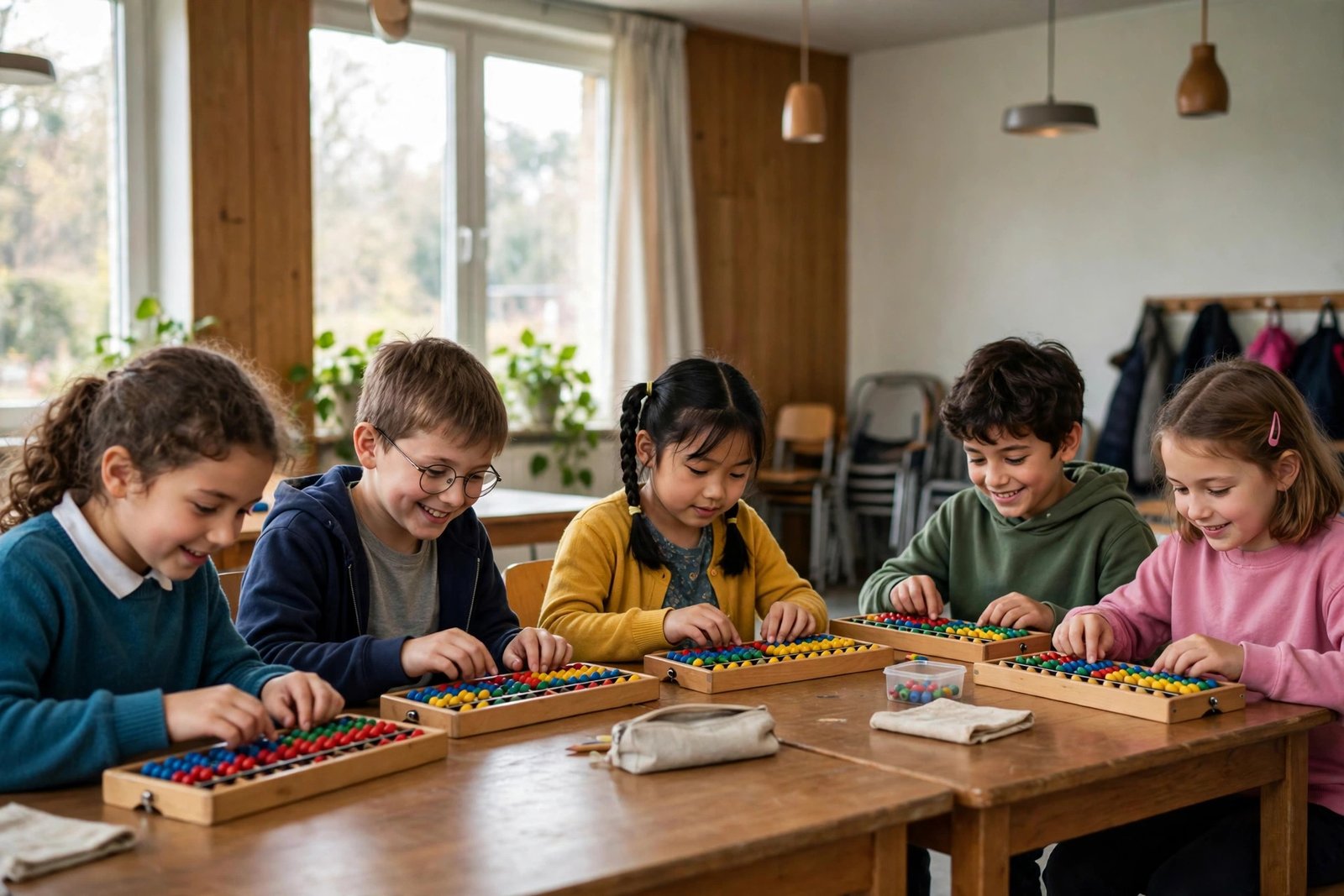
The single most useful step is observing a real session, or at least part of one. Watch how the teacher explains a new move, how they correct mistakes, and how children respond. Corrections should be calm and specific. Children should be busy with beads in hand for much of the session, not watching long explanations. Listen for encouragement that names effort and strategy rather than only praising the fastest child.
Ask about class size and grouping. Are beginners grouped together, or mixed with advanced learners? Mixed groups can work when a teacher is experienced, but beginners need enough direct attention while finger technique is forming. Ask who teaches if the regular teacher is away, and whether groups stay stable across a term.
Questions about teaching approach
Ask how new concepts are introduced, how mental maths is built gradually from the physical abacus, and how the teacher handles a child who falls behind or races ahead. Good teachers can describe differentiation in simple, concrete terms. If answers stay vague or focus only on competitions and trophies, keep asking or keep looking.
Home Practice and Communication With Parents
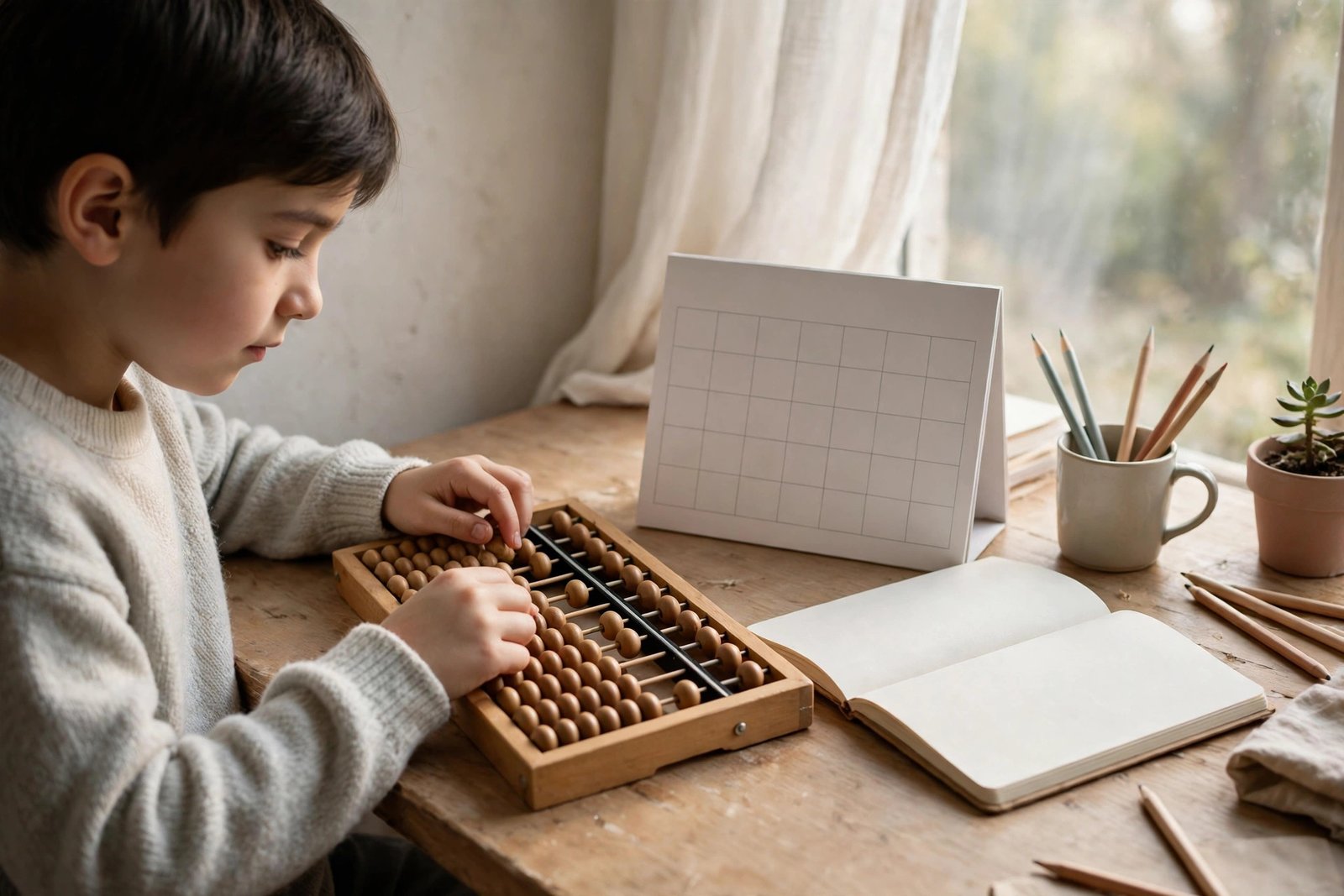
Abacus skill grows through short, regular home practice, so ask exactly what is expected between classes. How many minutes a day, how many days a week, and what should practice look like? Compare the answer with a daily abacus practice routine to see whether it fits family life. A provider who expects long daily drills from a five year old may not understand young learners.
Ask how you will know how your child is doing. Some classes send a short note after each level, some hold parent meetings, and some expect parents to check worksheets. Regular, honest communication matters more than glossy reports. You should hear about difficulties early, while they are still small and easy to fix.
Find out what support exists when practice stalls at home. Can you message the teacher? Are there guidance sheets for parents who never learned abacus themselves? You do not need to teach the method, but you do need enough guidance to supervise practice without accidentally teaching a conflicting technique.
Costs, Terms and Practical Details
Ask for the full cost in writing: registration, monthly or term fees, materials, exam or level fees, and competition entry if applicable. Check the policy for missed classes, holidays, pausing during family travel, and leaving mid term. Fair policies are stated plainly before you pay, not explained only when a problem arises.
Location and timing deserve honest thought. A class just after a long school day may suit one child and exhaust another. Weekend classes compete with family time. Trial lessons are valuable here. Many good providers offer one, and a trial shows you travel, timing, teacher and atmosphere in one go. After the trial, ask your child specific questions about what they did and how the teacher helped, rather than only whether it was fun.
Before deciding, work through the checklist in questions to ask before enrolling in an abacus program and compare at least two options if you can. Taking a few extra days to choose well is far better than moving a unhappy child between classes a month later.
Red Flags and Good Signs
Be careful with pressure selling, discounts that expire immediately, promises of guaranteed academic results, or teachers who discourage questions. Large classes where beginners receive little attention, frequent teacher changes without explanation, and a focus on speed before accuracy are also reasons to pause. Trust your observation of how children are treated over any claim in a leaflet.
Good signs are quieter: a teacher who asks about your child, a clear level structure, a calm classroom, honest talk about practice, and children who look engaged rather than anxious. When those pieces line up with your budget and schedule, you have likely found a class where your child can learn steadily and enjoy the process.
Keep each session short enough that your child finishes feeling capable rather than drained. A calm ending matters, because the feeling a child carries away from one session shapes how willingly they return for the next. If energy dips, pause, stretch, shake out busy fingers, and come back to one final easy row of beads. Ending on a success, even a small one, builds a quiet sense of progress that carries across the week.
Notice what helps your child most and write it down in a simple notebook. Some children like working in silence, some like a parent nearby reading, and some concentrate better after a snack or a short walk. There is no single right pattern. When you spot a pattern that works, repeat it gently for a few weeks before changing anything, because young learners settle when the shape of practice stays familiar.
Praise effort in specific words. Instead of a general well done, try naming what you saw, such as careful finger movement, checking an answer twice, or staying patient with a tricky row. Specific praise tells a child exactly what to repeat next time. It also keeps the focus on the process rather than on speed or comparison with anyone else, which protects confidence over the long term.
If a day goes badly, treat it as information rather than failure. Perhaps the sums were a step too hard, the room was noisy, or your child was simply tired. Adjust one thing, make the next session a little easier, and let success return. Children learn steadily when adults respond with curiosity instead of pressure, and a difficult day does not undo the good work already done.
Invite your child to explain a step back to you in their own words. Teaching, even for a minute, shows you what they truly understand and where a gentle correction might help. Keep your questions open and patient, and resist jumping in too quickly when they pause to think. That pause is often where the real learning is happening, as they picture the beads and work out the move for themselves.
Small, steady habits beat occasional long sessions. A few focused minutes on most days gives fingers repeated practice and keeps earlier skills warm while new ones are introduced. If you miss a day, simply begin again the next day without doubling the work or apologising for the gap. Consistency built kindly lasts far longer than a strict routine that makes everyone in the house feel tense.
Keep materials ready so starting is easy. When the abacus, pencils and practice sheets live in one predictable place, there is no hunting around and no lost momentum at the start of a session. Let your child help put things away neatly at the end, sliding the beads back to their resting position. That tiny closing ritual signals that practice is finished and the rest of the day can unfold.
Keep each session short enough that your child finishes feeling capable rather than drained. A calm ending matters, because the feeling a child carries away from one session shapes how willingly they return for the next. If energy dips, pause, stretch, shake out busy fingers, and come back to one final easy row of beads. Ending on a success, even a small one, builds a quiet sense of progress that carries across the week.
Notice what helps your child most and write it down in a simple notebook. Some children like working in silence, some like a parent nearby reading, and some concentrate better after a snack or a short walk. There is no single right pattern. When you spot a pattern that works, repeat it gently for a few weeks before changing anything, because young learners settle when the shape of practice stays familiar.
Praise effort in specific words. Instead of a general well done, try naming what you saw, such as careful finger movement, checking an answer twice, or staying patient with a tricky row. Specific praise tells a child exactly what to repeat next time. It also keeps the focus on the process rather than on speed or comparison with anyone else, which protects confidence over the long term.
Conclusion
Every child learns in their own way and at their own pace, and the best decisions come from calm observation, honest questions and small steady steps. Use the ideas in this guide as a starting point, adapt them to your family, and keep talking with your child and their teacher as you go. With patience, encouragement and regular gentle practice, abacus can become a skill your child carries with confidence into school maths and everyday life.

One thought on “How to Choose an Abacus Class or Tutor for Your Child”