Why a Dedicated Corner Helps
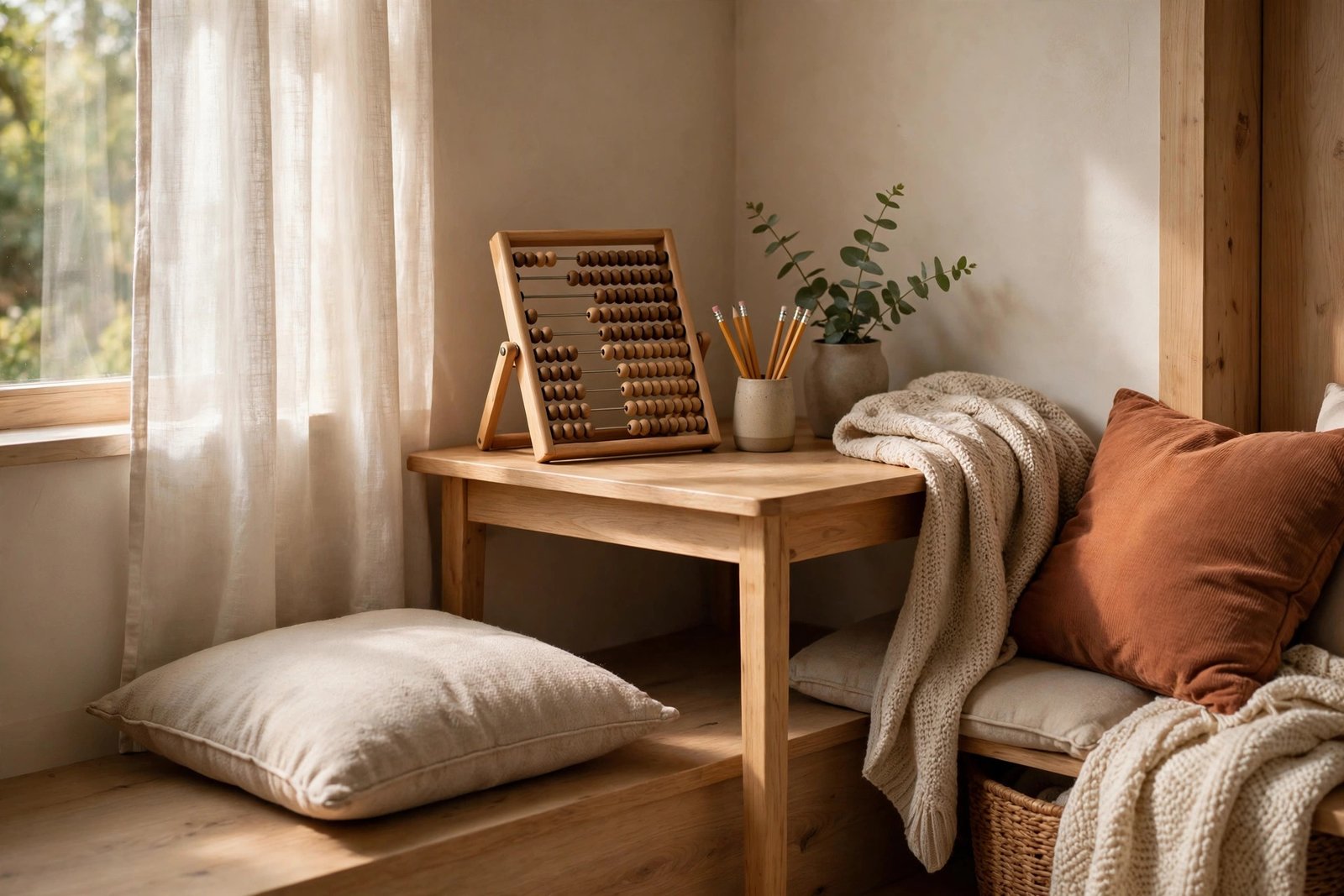
A corner does not need to be large, expensive or perfectly styled to make a real difference. What matters is that your child has one predictable place where abacus practice happens, a place that feels calm the moment they sit down. When the same spot is used each time, the brain begins to link that chair, that light and that small stretch of table with focused work. Starting becomes easier because there is no decision to make about where to go or what to fetch.
Many families begin on the dining table and find practice competing with homework, meals, post and everyday clutter. A small dedicated corner, even the end of a desk or a tray that comes out at the same time each day, removes that friction. It also protects the abacus itself. Beads and frames last longer when they are stored in one place rather than carried around the house or left under toys.
Calm is the guiding word. A practice corner should lower noise and distraction, not add pressure. Think of it as a workshop for small hands: everything within reach, nothing extra competing for attention, and enough comfort that your child can sit well for ten or fifteen minutes at a time.
Choosing the Spot
Walk around your home at the time of day practice usually happens and notice where it is naturally quieter. A corner of a bedroom, a spot near a window in the living room, or a small desk in a hallway can all work. Avoid placing the corner directly in front of a television or in the middle of a busy walkway where siblings pass constantly. A wall in front of the chair is often better than a busy view, though soft daylight from the side is welcome.
Check the light. Your child needs to see bead colours and worksheet numbers clearly without squinting. Daylight is ideal, and a simple desk lamp with a warm, steady light helps on darker evenings. Avoid harsh overhead light that casts a shadow from the hand onto the frame. Sit in the chair yourself and look down at the table height. Elbows should rest comfortably, feet should reach the floor or a footrest, and the abacus should sit flat without wobbling.
Sound matters too. You cannot silence a whole home, and you do not need to. Simply choosing the corner furthest from the television, washing machine or front door reduces the biggest interruptions. Some families use a small sign or a favourite cushion that signals practice time to everyone else in the house.
What to Keep in the Corner
The essentials
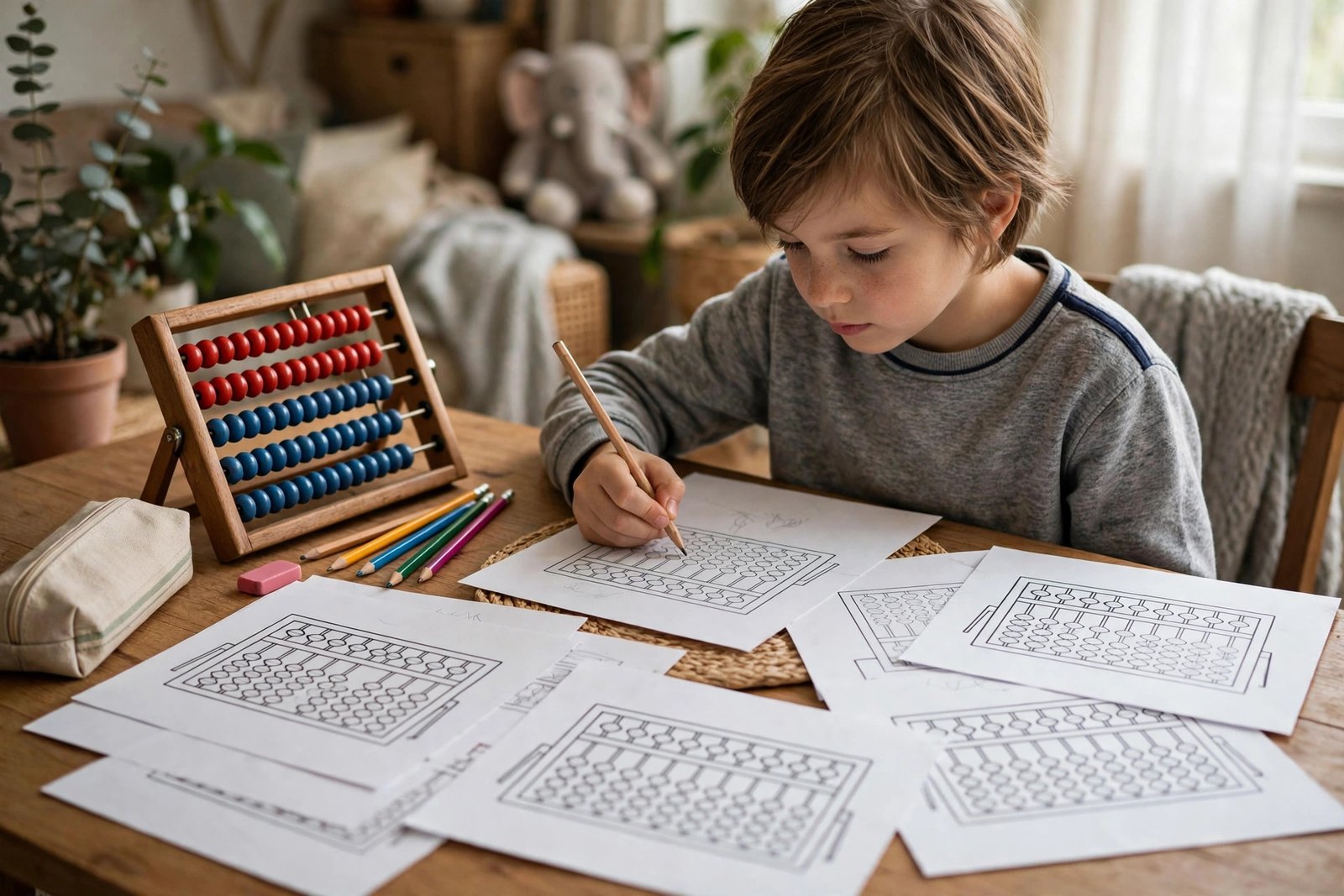
Start with very little: the abacus, a pencil, an eraser, the current practice book or a small stack of sheets, and a folder for finished work. If you are still deciding on a frame, our guide to choosing the right abacus for your child explains sizes and bead shapes in plain language. Keep only the current level’s materials in the corner. Older books and future worksheets can live in a cupboard elsewhere, so the space never feels overwhelming.
Add a small timer if your child likes knowing when a session will end. A simple sand timer or a quiet kitchen timer works well, as long as it does not tick loudly or create a race. Some children relax when they can see time passing calmly. Others prefer a parent to give a gentle two minute warning instead. Try one approach for a week and notice the response.
Storage that a child can manage
Choose storage your child can open, carry and tidy alone: a shallow box, a basket, or one drawer. Label it with a picture if your child is young. When tidying takes less than a minute, it actually happens. A hook for headphones, a pot for pencils, and a flat tray for the abacus keep the surface clear between sessions, and a clear surface is an invitation to begin again tomorrow.
Setting Up the Routine Around the Corner
A corner works best when it is paired with a predictable rhythm. Link practice to an existing anchor, such as after breakfast, after school snack, or before bath time, and follow a simple daily abacus practice routine rather than inventing a new schedule every week. Walk to the corner together for the first few days, sit down the same way, clear the beads, and begin with one warm up row your child already knows well.
Keep the opening ritual short and identical: abacus flat, beads cleared, pencil ready, first easy question. Familiar openings calm nerves, especially on days when the new work looks harder. Close the session the same way too, perhaps by recording the date on the sheet, filing it in the finished folder, and letting your child choose a sticker or simply slide the beads home with a satisfying sweep.
Siblings need a plan as well. Give them a quiet activity nearby or agree that the corner is a no interruption zone for those few minutes. When everyone understands the boundary, the child practising feels respected rather than isolated.
Making It Inviting Without Making It Distracting
Let your child choose one or two personal touches: a cushion colour, a small plant, a drawing pinned beside the desk, or the pot that holds the pencils. Ownership increases willingness. Keep toys, tablets and colourful clutter off the practice surface itself, though. The distinction is simple: the corner can feel personal while the tabletop stays clear enough for beads to move freely.
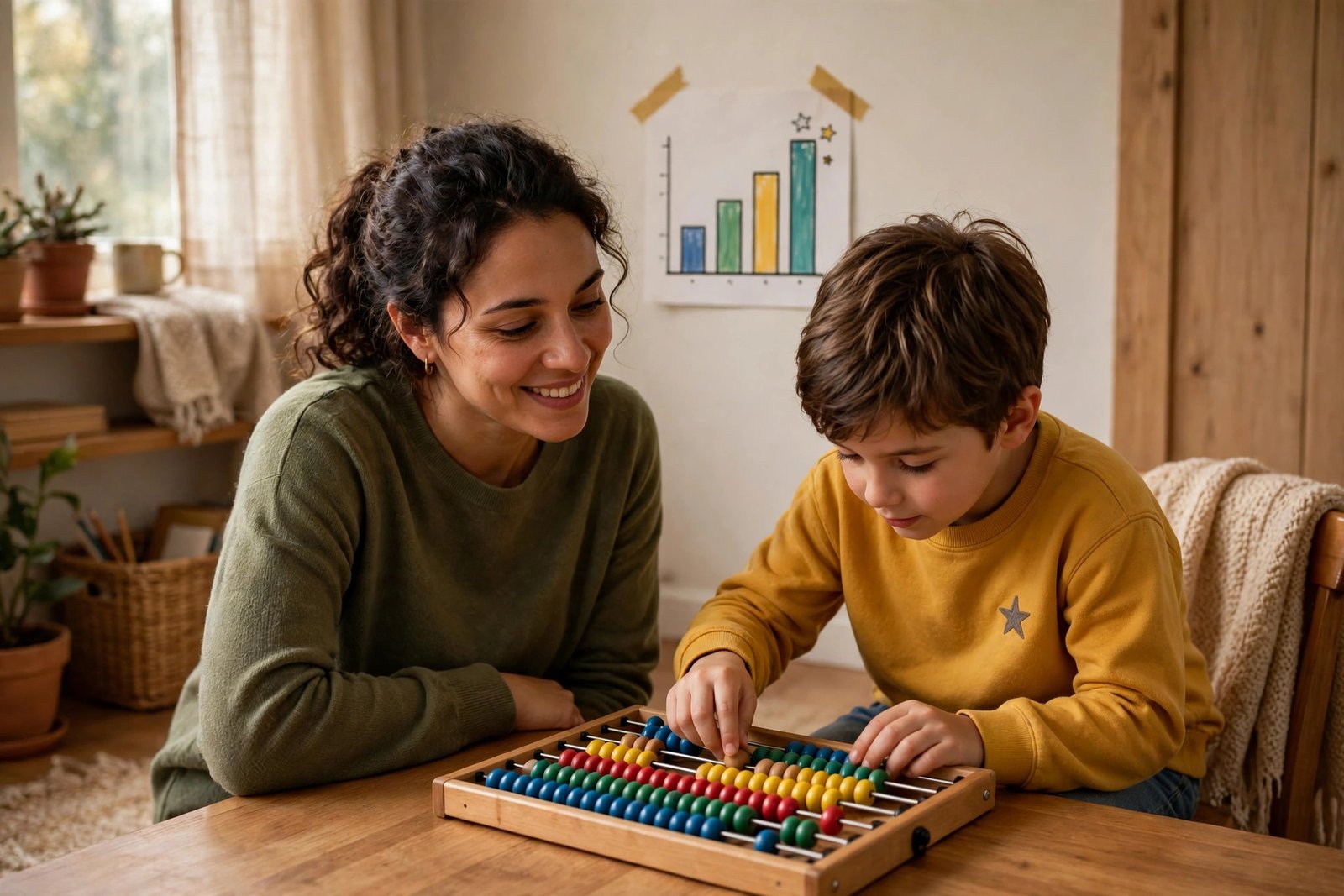
Rotate a small display of finished work. One completed worksheet or a chart showing levels passed can remind your child how far they have come. Avoid filling the wall with targets, comparisons or reward charts that turn every session into a test. If motivation dips at times, the ideas in keeping your child motivated with abacus practice can help you refresh the routine without adding pressure.
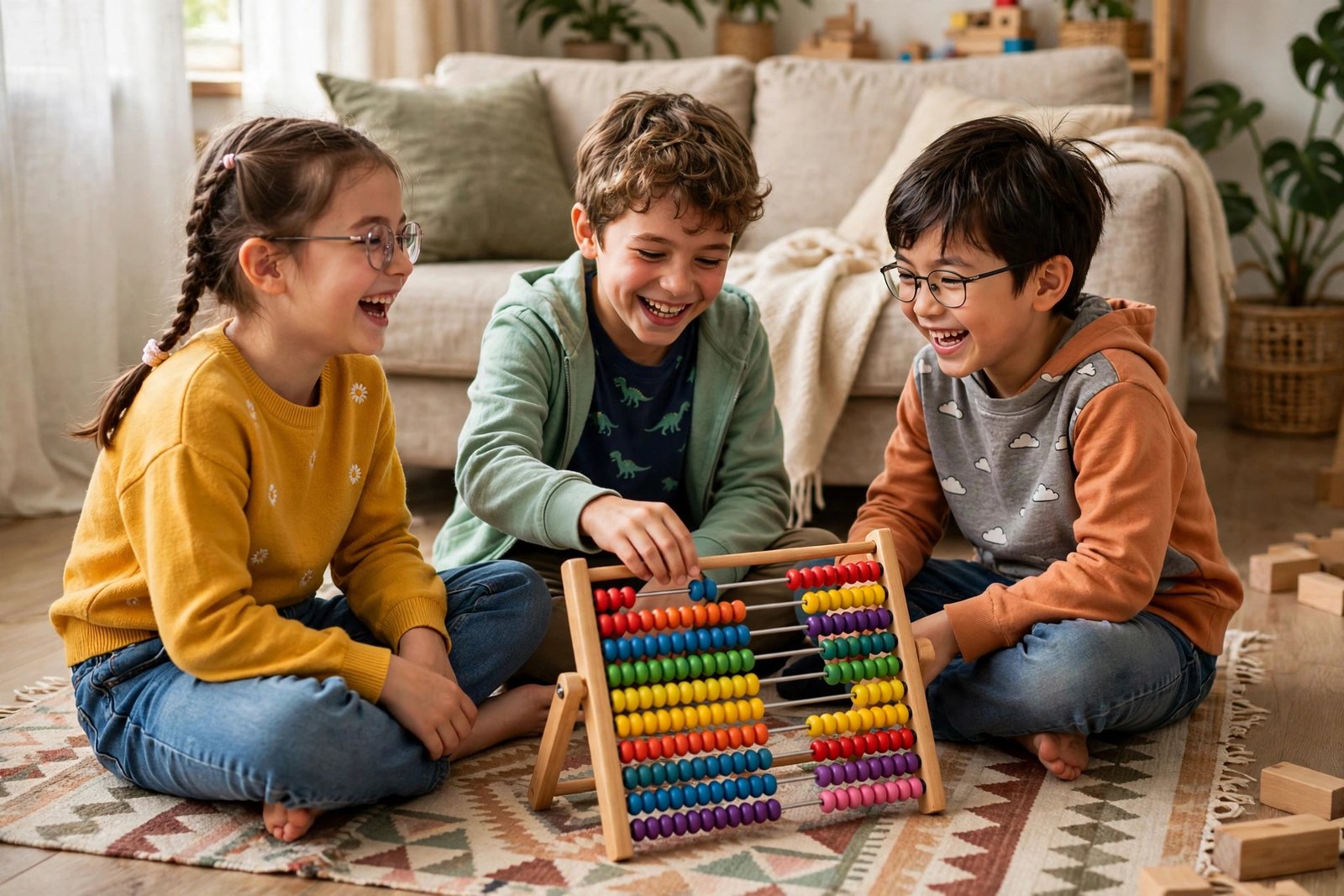
On some days, break the routine kindly and take the corner’s spirit elsewhere. A few sums on the sofa, a bead game at the kitchen table, or trying some of the fun abacus games for kids on the floor keeps practice feeling alive. The corner is a home base, not a rule that can never bend.
Safety, Posture and Care of the Abacus
Check the frame regularly for loose beads, rough edges or a cracked bar, especially if younger siblings handle it. Store it flat or upright in its tray, away from water and direct heat. Wipe it with a dry cloth rather than soaking it, and teach your child to move beads with fingertips rather than dragging the whole frame across the table.
Posture deserves a quick check each week as children grow. The chair should let the back rest comfortably, shoulders should stay relaxed, and the abacus should sit close enough that your child is not leaning far forward. If you notice squinting, headaches or constant fidgeting, look first at light, chair height and session length before assuming the maths itself is the problem.
Finally, review the corner together every month or so. Ask what helps, what gets in the way, and what your child would change. Small adjustments made together, moving the lamp, swapping the cushion, clearing out finished sheets, keep the space working as your child and their abacus skills grow.
Keep each session short enough that your child finishes feeling capable rather than drained. A calm ending matters, because the feeling a child carries away from one session shapes how willingly they return for the next. If energy dips, pause, stretch, shake out busy fingers, and come back to one final easy row of beads. Ending on a success, even a small one, builds a quiet sense of progress that carries across the week.
Notice what helps your child most and write it down in a simple notebook. Some children like working in silence, some like a parent nearby reading, and some concentrate better after a snack or a short walk. There is no single right pattern. When you spot a pattern that works, repeat it gently for a few weeks before changing anything, because young learners settle when the shape of practice stays familiar.
Praise effort in specific words. Instead of a general well done, try naming what you saw, such as careful finger movement, checking an answer twice, or staying patient with a tricky row. Specific praise tells a child exactly what to repeat next time. It also keeps the focus on the process rather than on speed or comparison with anyone else, which protects confidence over the long term.
If a day goes badly, treat it as information rather than failure. Perhaps the sums were a step too hard, the room was noisy, or your child was simply tired. Adjust one thing, make the next session a little easier, and let success return. Children learn steadily when adults respond with curiosity instead of pressure, and a difficult day does not undo the good work already done.
Invite your child to explain a step back to you in their own words. Teaching, even for a minute, shows you what they truly understand and where a gentle correction might help. Keep your questions open and patient, and resist jumping in too quickly when they pause to think. That pause is often where the real learning is happening, as they picture the beads and work out the move for themselves.
Small, steady habits beat occasional long sessions. A few focused minutes on most days gives fingers repeated practice and keeps earlier skills warm while new ones are introduced. If you miss a day, simply begin again the next day without doubling the work or apologising for the gap. Consistency built kindly lasts far longer than a strict routine that makes everyone in the house feel tense.
Keep materials ready so starting is easy. When the abacus, pencils and practice sheets live in one predictable place, there is no hunting around and no lost momentum at the start of a session. Let your child help put things away neatly at the end, sliding the beads back to their resting position. That tiny closing ritual signals that practice is finished and the rest of the day can unfold.
Keep each session short enough that your child finishes feeling capable rather than drained. A calm ending matters, because the feeling a child carries away from one session shapes how willingly they return for the next. If energy dips, pause, stretch, shake out busy fingers, and come back to one final easy row of beads. Ending on a success, even a small one, builds a quiet sense of progress that carries across the week.
Conclusion
Every child learns in their own way and at their own pace, and the best decisions come from calm observation, honest questions and small steady steps. Use the ideas in this guide as a starting point, adapt them to your family, and keep talking with your child and their teacher as you go. With patience, encouragement and regular gentle practice, abacus can become a skill your child carries with confidence into school maths and everyday life.