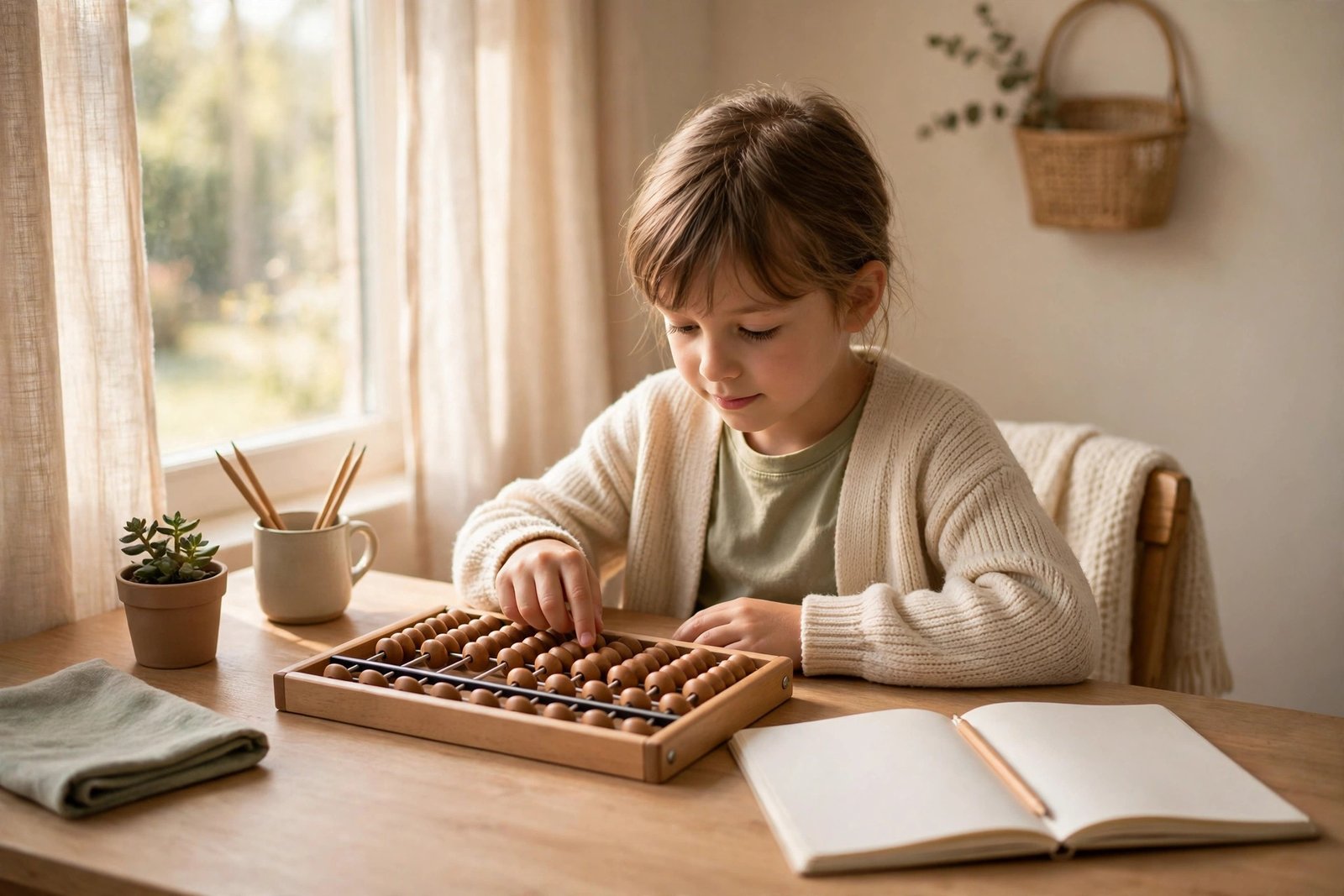
Ask any abacus teacher what makes the biggest difference, and the answer is rarely talent. It is routine. Short, regular practice, done in a calm and predictable way, helps children remember the finger movements, build speed gradually, and feel proud of steady progress. Long, irregular sessions, by contrast, often end in tiredness and frustration for everyone.
The good news is that an effective abacus practice routine does not need to be complicated or time-consuming. For most children, ten to twenty minutes a day, structured well, is plenty. What matters is that the time is focused, the steps are clear, and the session ends before your child is fed up. A routine that feels easy to keep will beat an ambitious plan that collapses after a week.
This guide shows you how to build a simple daily routine at home, how to structure each session, how to handle busy days and difficult days, and how to track progress without turning practice into pressure. Adapt the details to your family’s schedule and your child’s age. The principles stay the same even if the timings change.
Why Short Daily Practice Works Best
Abacus skill lives in the fingers as much as in the mind. The movements for setting numbers, adding, and clearing need repetition until they feel natural, much like learning to tie shoelaces or play a scale on an instrument. Frequent short sessions give the fingers and brain many chances to repeat those movements while the child is still fresh.
Daily practice also keeps yesterday’s learning alive. When a child returns to the abacus after a long gap, the first minutes are spent remembering rather than improving. With a daily habit, each session starts where the last one ended, so progress feels smoother and more satisfying. Children notice this themselves, and that sense of moving forward is motivating.
There is a confidence effect too. A small task completed every day teaches a child that they can stick with something. Parents who set up a welcoming space, like the ideas in setting up an abacus practice corner at home, often find that children settle faster because the place itself signals that it is practice time.
Choosing the Right Time of Day
The best time is the time your family can protect most days. For many children, practising soon after school, after a snack and a short break, works well because the day’s learning is still warm and the evening is still free. Others concentrate better in the morning before school, when they are fresh and the house is quiet.
Avoid times when your child is usually hungry, very tired, or rushing to another activity. Practice squeezed into a stressful moment tends to go badly and can create a negative association with the abacus itself. If your schedule changes on certain days, it is fine to have two standard times, one for school days and one for weekends, as long as your child knows what to expect.
Attach practice to an existing habit to make it stick. For example: snack, then abacus, then free play. Or homework, then abacus, then dinner. When practice has a fixed place in the sequence of the day, there is less negotiating about whether it will happen, and children often start preparing themselves as the preceding activity ends.
What a Good Session Looks Like, Step by Step
Step 1: Set up and warm up, two minutes
Begin the same way every time. Your child sits comfortably, places the abacus flat, and clears it. Then comes a short warm-up: setting numbers you call out, making simple patterns, or revising the finger movements from the last lesson. Warm-ups wake up the fingers and give an easy early success, which sets a positive tone.
If your child is still learning the basics, revisit abacus finger technique during warm-ups. Correct grip and movement, practised briefly every day, prevent sloppy habits that are much harder to fix later. Keep corrections light and specific: one thing at a time is enough.
Step 2: Focused practice, eight to twelve minutes
This is the heart of the session: working on the current skill. That might be a set of addition sums, a new subtraction step, or a page of exercises from your child’s class. Work in small sets, perhaps five to ten sums, then pause, check together, and celebrate what went right before continuing.
Accuracy comes before speed. Encourage your child to say or think each step clearly rather than racing. If errors keep appearing in the same place, slow down and practise that single step a few times on its own. Short, targeted repetition fixes problems far better than pushing through a whole page of mistakes.
Step 3: A mental maths moment, two to three minutes
As your child’s course progresses, include a brief moment of working without moving the beads, picturing them instead. Start tiny: one simple sum visualised, then checked on the real abacus. This gentle bridge builds the mental skill that abacus training is ultimately aiming for, without making it feel like a test.
Step 4: Finish with fun, two to three minutes
End with something your child enjoys: a quick game, a challenge against their own previous best, or choosing a favourite sum type to finish on. Ending on a high note matters more than squeezing in extra sums. Your child should walk away thinking that practice was manageable and even enjoyable, so tomorrow’s session starts willingly.
A Sample Week of Practice
Variety within a routine keeps practice fresh while the structure stays reassuring. Here is a simple pattern many families use. On Monday, focus on the newest skill from class. On Tuesday, revise the previous skill to keep it secure. On Wednesday, mix old and new sums together. On Thursday, add a listening exercise, where you read numbers aloud and your child works them out without seeing them written down.
Friday can be a lighter day: games, challenges, and favourite exercises only. The weekend can include one normal session and one rest day, or two shorter sessions, depending on your family’s rhythm. Rest matters. Muscles and minds consolidate learning during breaks, and a child who gets a day off usually returns keener.
Children who attend a weekly class can align home practice with the class cycle. Practise the new topic in the two days after class while it is fresh, revise midweek, and do a light review the day before the next class. If you are considering classes, the guidance on how long it takes to learn the abacus can help you set realistic expectations for each stage.
Keeping Sessions Calm and Positive
Your tone shapes the whole experience. Sit nearby, especially for younger children, but resist doing the work for them. Ask guiding questions instead of giving answers: which column do we start with, what do the beads show now, does that answer look sensible? These questions teach children to monitor their own work.
Praise specifics. Saying you checked each column carefully, or you kept going even when that sum was tricky, tells your child exactly which behaviours lead to success. General praise is pleasant, but specific praise is instructive. When correcting, stay neutral and curious. Treat a wrong answer as a puzzle to solve together: let us see where it changed. That framing keeps mistakes safe, and children who feel safe making mistakes learn faster.
If frustration rises, pause. A drink of water, a stretch, or switching to an easier set can rescue a session. If your child is genuinely tired or upset, ending early is better than forcing the full time. The routine serves the child, not the other way round, and tomorrow is another chance.
Tracking Progress Without Pressure
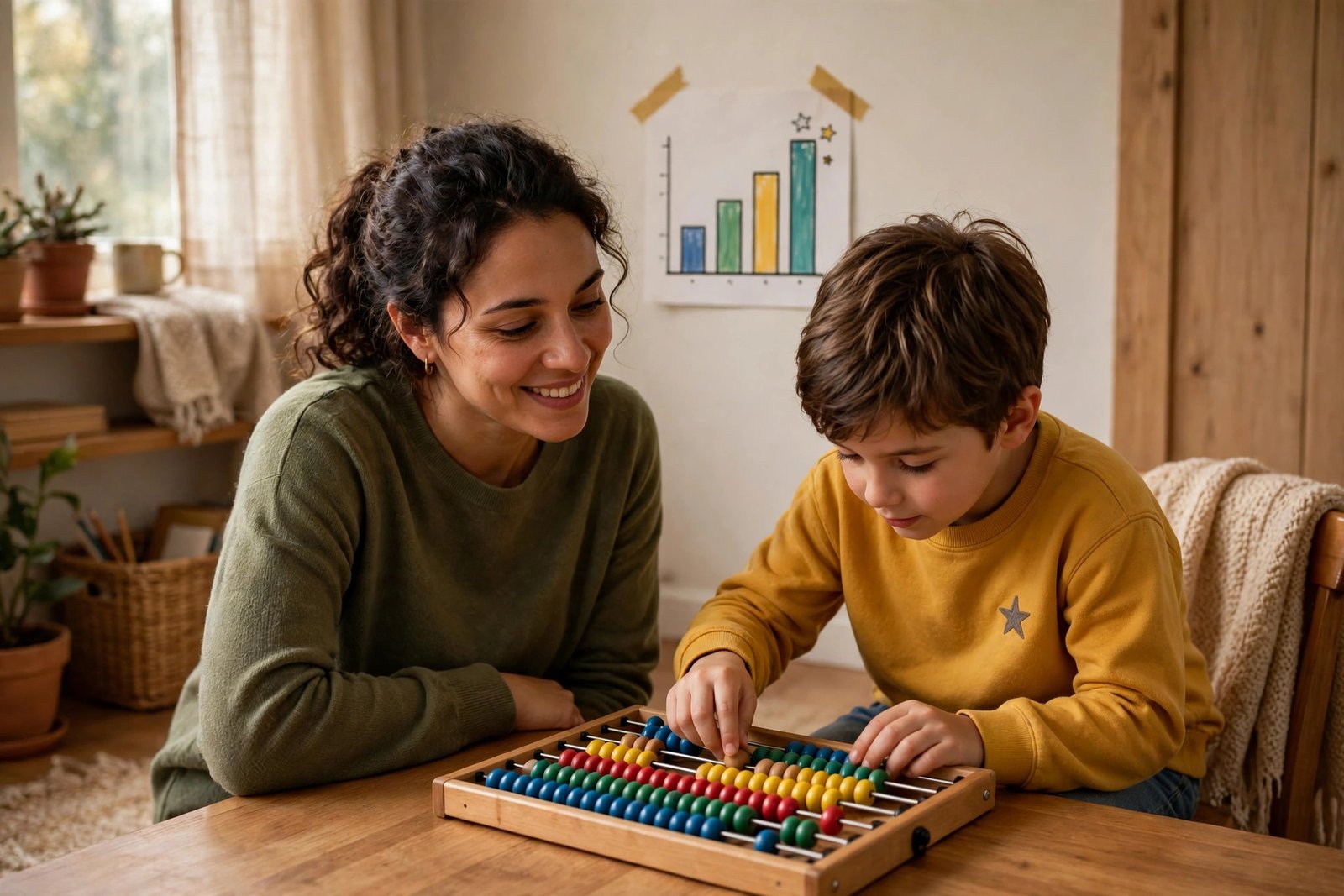
Simple tracking helps children see how far they have come. A wall chart with a sticker for each completed session, a notebook page listing new skills mastered, or a monthly note of how many sums your child can do accurately in a set are all gentle options. Focus the record on effort and milestones rather than rankings or comparisons with other children.
Every few weeks, revisit an exercise your child found hard at the start. Being able to do it easily now is powerful evidence of growth, and children love experiencing it. You can also keep one early workbook instead of throwing it away. Flicking through it together, and noticing how much neater and faster the work has become, makes progress tangible.
Avoid turning tracking into a second test. If a chart starts causing tears or bargaining, simplify it. The aim is a quiet sense of achievement that supports the habit, not another source of stress in an already busy week.
Handling Busy Days, Holidays, and Breaks
Real life interrupts routines. On very busy days, do a five-minute mini session: warm-up, a handful of sums, and a cheerful finish. A tiny session keeps the habit alive and is far better than a guilty skip followed by a double session the next day, which usually exhausts everyone.
During holidays, decide in advance what you will do. Some families keep the daily habit but with game-based practice only. Others pause completely and restart gently in the first week back, beginning with revision rather than new material. Either approach works if the restart is planned and kind. Expect the first sessions after a break to be slower, and treat that as normal.
Travel is no obstacle either. An abacus is portable, and practice can happen in short bursts wherever you are staying. Some children enjoy the novelty of practising somewhere new. If taking the frame is impractical, mental practice and number games can bridge the gap until you are home.
Common Routine Problems and Simple Fixes
If your child resists starting, shorten the session and make the first step ridiculously easy. Often the resistance is about starting, not about the work itself. If practice regularly runs too long, use a timer your child can see, and honour it strictly, even mid-page. Trust that the timer will be respected makes children work calmly within it.
If the same mistakes keep returning, the issue is usually a step that was never fully secure. Go back one level, practise that step slowly for a few days, and build up again. There is no shame in revisiting foundations; it is how strong skills are made. Resources on common abacus mistakes beginners make can help you spot the usual trouble spots and correct them kindly.
If boredom is the problem, change the format before changing the goal. Introduce a game, let your child be the teacher and test you, or practise with real-life numbers from shopping and cooking. A routine should be predictable in its timing, not dull in its content.
Involving the Whole Family Lightly
Siblings and grandparents can play small, welcome roles: calling out numbers for dictation, applauding a finished set, or joining a family number game at the weekend. Keep involvement supportive rather than competitive, especially with siblings at different levels. Each child’s progress is their own story.
Some families keep a tiny ritual around practice, such as the child choosing the warm-up music or ringing a small bell when a set is complete. Little rituals sound trivial, but they mark practice as a valued, shared part of the day rather than a chore imposed by adults. Over months, these small positives accumulate into a strong learning culture at home.
Conclusion
A simple daily abacus practice routine is built on four ideas: keep it short, keep it at the same time, structure each session from warm-up to a fun finish, and stay calm and specific in your encouragement. Ten to twenty focused minutes most days will, over time, do far more for your child’s skill and confidence than occasional long sessions. Start small, protect the habit, adjust kindly when life gets in the way, and let steady progress do the rest.

One thought on “A Simple Daily Abacus Practice Routine for Kids at Home”