Practice works best when children want to do it. Worksheets and drills have their place, but games change the feeling of abacus work completely. A child who groans at a page of sums will often beg for one more round of a game that practises exactly the same skills. The beads are the same, the numbers are the same, but the mood is entirely different.
Games also give children a reason to calculate. Instead of answering because an adult asked, they answer because they want to move a counter, beat their own score, guess a mystery number, or win a friendly race. That sense of purpose sharpens attention in a way that plain repetition rarely does, and it helps skills stick.
Below are ten fun abacus games for kids that need little or no preparation. Most use only an abacus, some number cards or dice, and a pencil for scores. They suit home practice and classrooms alike, and each one notes the skill it builds and how to make it easier or harder. Mix two or three into your weekly routine and watch practice time become play time.
1. Beat the Timer, Beat Yourself
Set a short list of sums at your child’s current level, perhaps five addition questions. Time how long they take to complete the set accurately on the abacus, and write the time down. The next day, they try to beat their own time, not anyone else’s. The personal-best framing keeps the pressure healthy and the excitement high.
Accuracy always outranks speed. Agree that a set only counts if every answer is correct, or subtract a few seconds of glory for each mistake and check together. Over a week, children love seeing their times come down as their fingers learn the patterns. Keep the sets short so the game stays snappy, and stop while it is still fun.
2. Mystery Number
One player sets a secret number on the abacus behind a book or a screen, then gives clues: it is bigger than twenty, it is an odd number, its tens digit is three. The other player sets guesses on their own abacus and narrows down the answer with each clue. Swap roles after each round.
This game builds place value and logical thinking together. Children have to hold clues in mind, test possibilities, and use the columns deliberately. For younger children, keep numbers under twenty and give generous clues. For older ones, use three-digit numbers and fewer, trickier clues. It pairs beautifully with early work on parts of an abacus, because children name and use each column as they play.
3. Abacus Bingo
Make simple bingo cards with numbers your child is learning, perhaps twelve numbers in a grid. Call out sums instead of numbers: the answer to each sum is the number to cover. The child works out each sum on the abacus and covers the number if it appears on their card. A completed row earns a cheer, a sticker, or the honour of calling the next round.
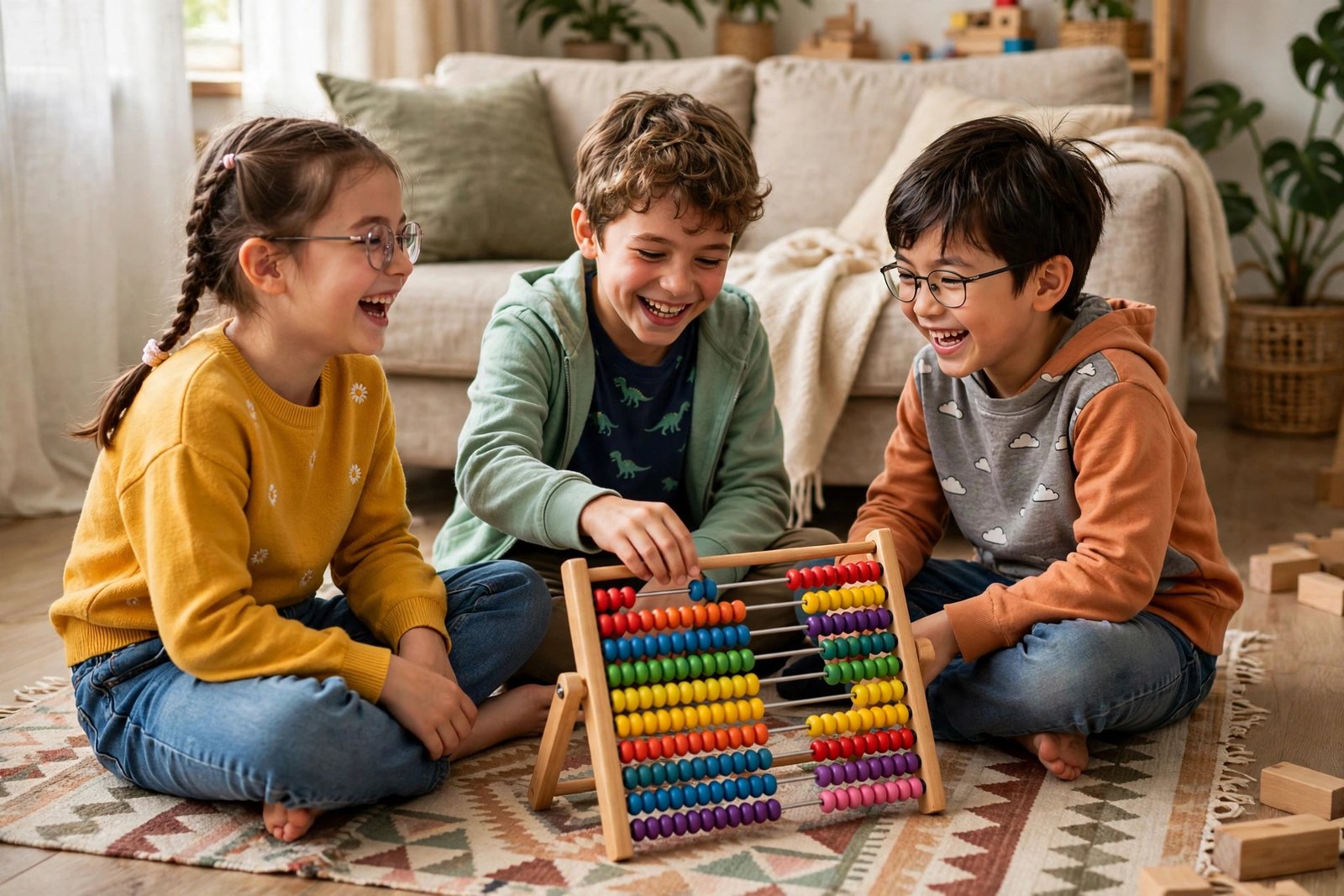
Bingo works wonderfully with siblings or small groups because everyone plays at once and luck keeps it fair across different skill levels. Prepare a few cards at different difficulties so each child gets sums they can manage with effort. The caller role is valuable too. Children who call the sums and check answers are practising even when they think they are just running the game.
4. Race to One Hundred
Both players start with a cleared abacus. Take turns rolling a dice, or drawing a number card, and adding that number to your total. The first to reach exactly one hundred wins. If a roll would take you past one hundred, you miss that turn, which adds a delicious bit of tension near the end.
The game practises repeated addition and, as totals grow, carrying into the next column. It also teaches planning: children start watching the gap between their total and one hundred and hoping for the exact number they need. For younger children, race to twenty or fifty instead. For older children, allow two dice, or start at one hundred and subtract down to zero for a subtraction version.
5. Shopkeeper
Set up a pretend shop with a few toys or snacks and simple price tags in whole numbers. The customer chooses items, and the shopkeeper must add up the total on the abacus. The customer pays with pretend money, and the shopkeeper works out the change. Swap roles regularly so both children practise both jobs.
Shopkeeper connects abacus skills to real life, which is a big part of how abacus helps with school maths and everyday numbers. Children take the game seriously because the roles feel grown-up, and they naturally start checking their totals so the shop runs fairly. Keep prices small at first, then add items with two-digit prices as confidence grows.
6. Listen and Set
This calm game needs no equipment beyond the abacus and your voice. Call out a number digit by digit, slowly at first: three tens, five ones. Your child sets it on the abacus, then reads it back to you. Build up to calling whole numbers, then short sums given entirely by ear, such as add twelve, add seven, take away five, and asking for the final total.
Listen and Set trains attention and listening, skills that matter in every classroom. Because there is nothing written to look back at, children learn to concentrate the first time. Keep rounds short, celebrate careful listening, and let your child have turns at being the caller. Calling clearly is harder than it sounds and deepens their understanding of place value.
7. Odd One Out
Set three numbers on the abacus, or show three sets of beads one after another if you have a single frame, where two share something and one is different: two even numbers and an odd one, two numbers with the same tens digit, two numbers that add to ten. Your child must spot the odd one out and explain why.
The explaining is the point. Putting number patterns into words builds the reasoning that school maths increasingly asks for. Accept any sensible answer, even if it is not the one you planned, as long as the logic holds. Children delight in finding a cleverer pattern than the adult intended, and that delight is genuine mathematical thinking.
8. Target Number Challenge
Choose a target, such as twenty-four. Give your child a set of number cards, dice rolls, or a written list of small numbers, and challenge them to reach the target exactly using addition, and later subtraction too. How many different ways can they find? Each solution must be shown and checked on the abacus.
This open-ended game rewards creativity and persistence. There is no single right answer, so children who dislike being wrong can relax and experiment. It fits naturally after learning small friend and big friend methods on the abacus, because reaching targets often needs exactly those clever groupings to ten. Display favourite solutions on the fridge for a day to honour the thinking.
9. Abacus Relay
For families or classes with energy to burn, set up a gentle relay. Place the abacus at one end of the room. Call a sum, and the child walks briskly to the abacus, works out the answer, calls it back, and returns. With two or more children, teams can take turns, with points for correct answers rather than for running speed.
Movement helps restless children focus, and the walk between sums gives the brain a tiny reset each round. Keep it safe and unhurried. The game is about the maths, not the racing, and no child should feel rushed while working at the frame. Finish with everyone completing one final sum together for a shared point.
10. Teach the Teddy
Your child becomes the teacher and a favourite toy becomes the pupil. The child must show the teddy how to set a number, how to add, and how to check the answer, explaining each step out loud. You play the teddy’s voice and ask simple questions, including the odd deliberate misunderstanding for your child to correct.
Teaching is one of the strongest ways to learn. Explaining forces children to organise what they know, and gaps in understanding show up immediately, kindly, in the middle of a game. This is also a lovely low-pressure option for days when your child is tired. The session still counts, the skills still get used, and nobody feels tested.
How to Use These Games in Your Weekly Routine
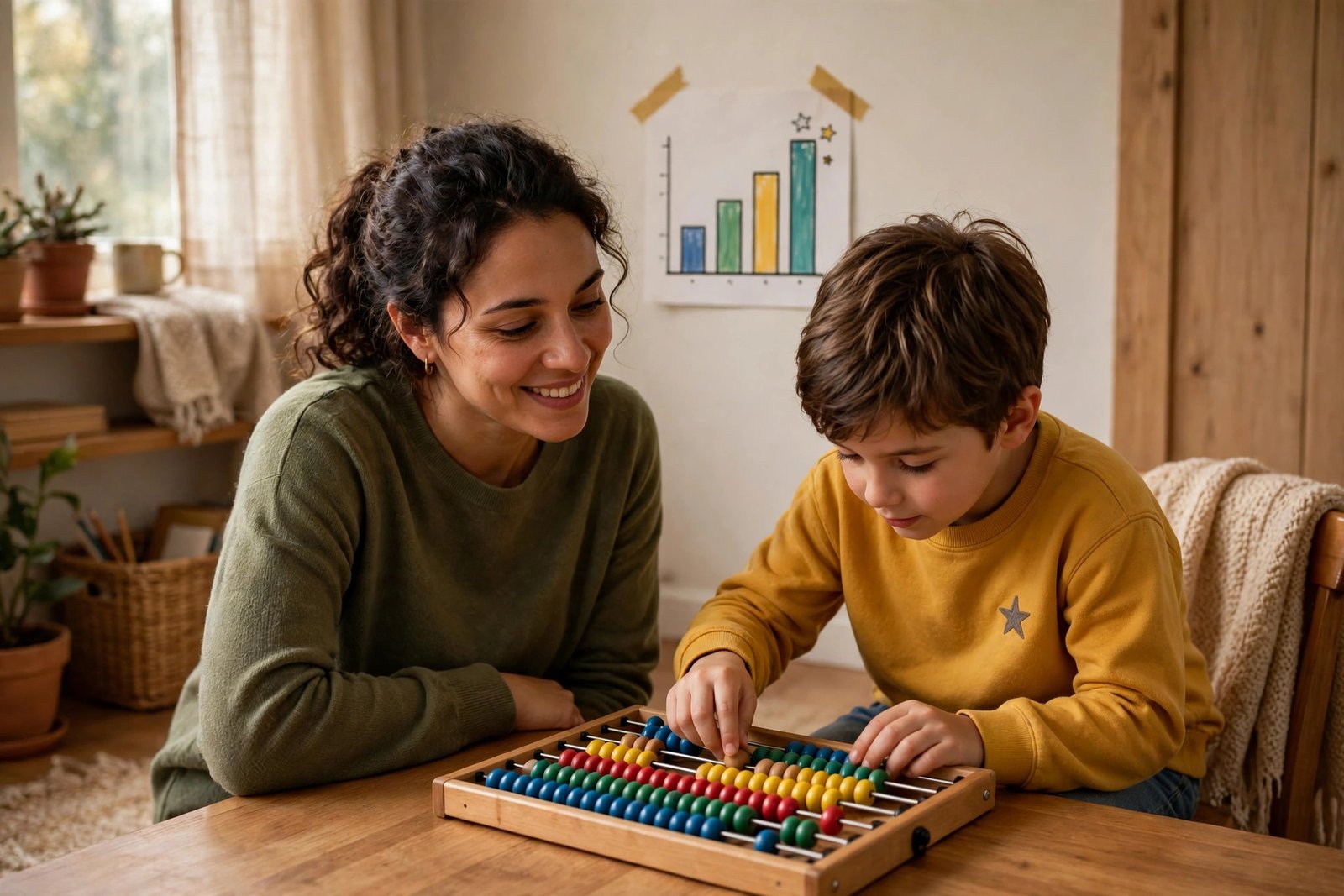
Games work best as a regular part of practice rather than a rare treat. Try ending two or three sessions a week with a game, and giving one weekend session over to games entirely. Let your child choose which game to play from a short list. Choice increases enthusiasm, and all the games practise useful skills, so there is no wrong pick.
Keep a simple balance. If a game only ever practises easy material, it becomes empty fun. If it is always at the edge of your child’s ability, it becomes stressful. Aim for the middle: mostly manageable, with a stretch now and then. Adjust numbers, targets, and timers freely. The rules in this article are starting points, not laws.
It also helps to connect games with your broader daily abacus practice routine, so play supports the structure rather than replacing it. A short focused practice followed by a game is a rhythm many families find sustainable for months, and sustainability is what produces real progress.
Keeping Games Fun and Fair
Protect the playful mood. Avoid turning every game into a lesson with constant corrections. Let small mistakes pass during play, note them quietly, and address patterns later in practice time. If a child becomes upset about losing, switch to personal-best or cooperative versions, where everyone works together toward a shared target.
For siblings of different ages, level the field with handicaps that feel fair: the older child uses bigger numbers, a shorter time, or must explain each step, while the younger uses numbers at their level. Both are challenged, both can win, and both are practising exactly what they need. Adults playing along should genuinely play, but not dominate. Losing gracefully to an improving child, when it happens naturally, is a memorable joy for them.
Finally, know when to stop. The golden rule of learning games is to finish while your child still wants more. A game ended early today will be requested tomorrow. A game dragged on past enjoyment can take weeks to become welcome again.
Conclusion
Abacus games turn repetition into play, giving children real reasons to calculate, check, and think. From Mystery Number and Bingo to Shopkeeper and Teach the Teddy, each game in this list builds core skills while keeping the mood light. Add two or three to your weekly routine, adjust the difficulty to suit your child, and always stop while it is still fun. When practice feels like play, children practise more, and that is where the real progress comes from.