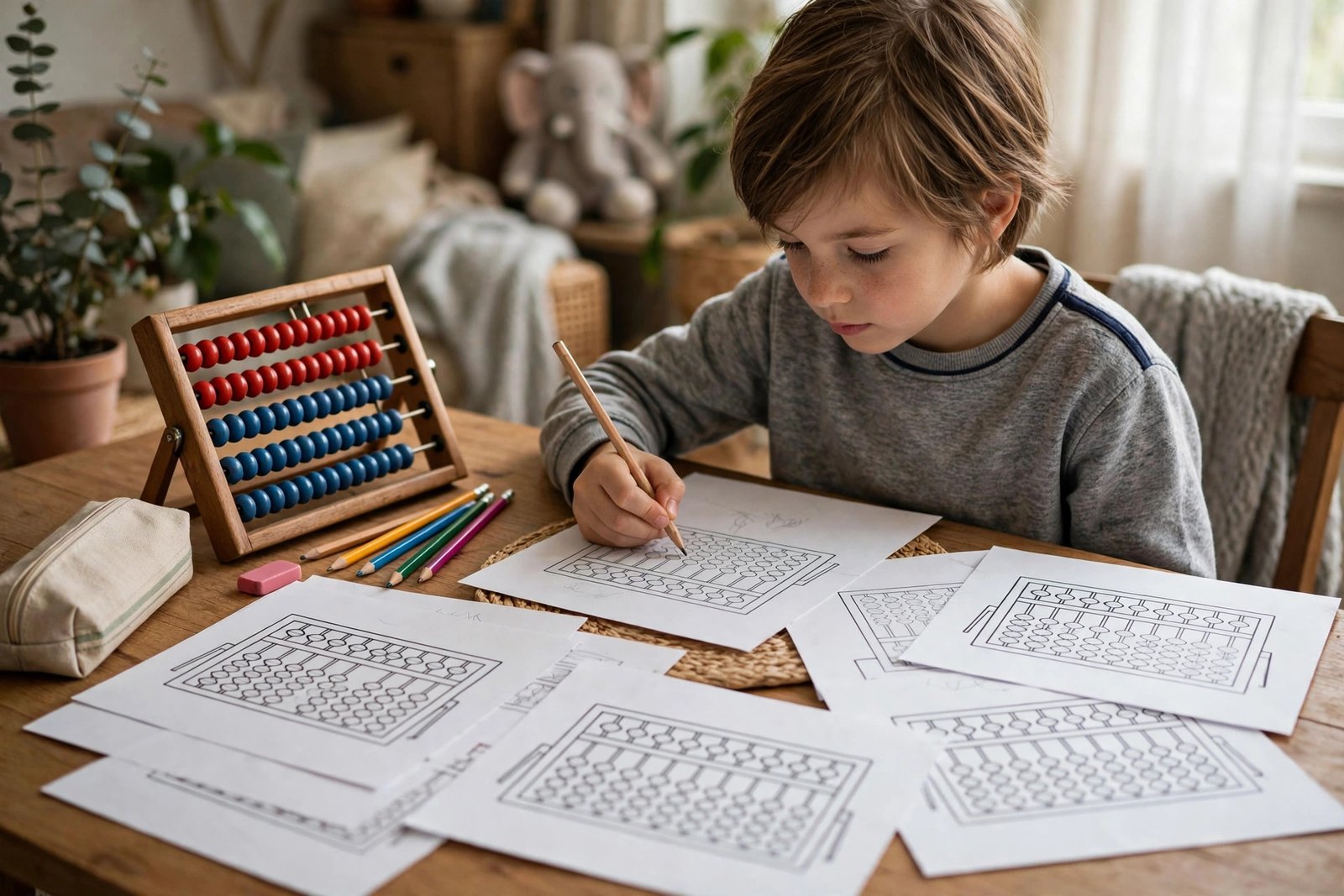
Almost every family reaches the same point. The first weeks of abacus learning are exciting: a new tool, new tricks, quick wins. Then the work gets harder. Sums grow longer, new steps take longer to master, progress slows, and one evening your child pushes the abacus away and says they do not want to practise. This moment is normal, and how adults respond to it makes a lasting difference.
Motivation is not a fixed trait that some children have and others lack. It rises and falls depending on whether a child feels capable, whether the work feels meaningful, whether they have some choice in how it happens, and whether the people around them respond with patience or pressure. Parents cannot control all of that, but they can influence a great deal of it through small, steady choices.
This article offers practical, kind strategies for keeping abacus motivation for kids alive when practice gets hard. None of them involves bribes, threats, or pretending the difficulty is not real. They are about setting the right goals, varying the work, celebrating progress honestly, and knowing when to rest, so your child can come through the hard patch with their confidence and curiosity intact.
Why Motivation Dips, and Why It Is Not Laziness
When a child resists practice, the first step is curiosity, not correction. Often the resistance has a specific cause. The new step may genuinely be confusing, and confusion feels unpleasant. The child may be comparing themselves with a faster classmate. They may be tired, hungry, or carrying a difficult day from school. Or practice may simply have become monotonous, the same format at the same time with nothing new to look forward to.
Each cause needs a different response. Confusion needs teaching and smaller steps. Comparison needs reframing. Tiredness needs rest or a better time of day. Monotony needs variety. Treating all resistance as an attitude problem misses the real issue and usually makes the dip deeper. Ask gently what feels hard about practice at the moment, and listen to the answer without immediately arguing with it.
It also helps to normalise the dip itself. Tell your child, truthfully, that every learner hits a stage where things feel harder, including adults learning new skills. The hard stage is not a sign that they are bad at abacus. It is usually a sign that they have reached genuinely new material, which is exactly where learning happens.
Make Goals Small, Visible, and Achievable
Big goals inspire adults in speeches and overwhelm children in practice. Finishing a whole level or mastering multiplication feels impossibly far away to a seven-year-old on a tired Tuesday. Small goals work better: complete five accurate sums, learn one new friend pair, finish a set without a column mistake. A child can hold a small goal in mind, reach it today, and feel the satisfaction of arrival.
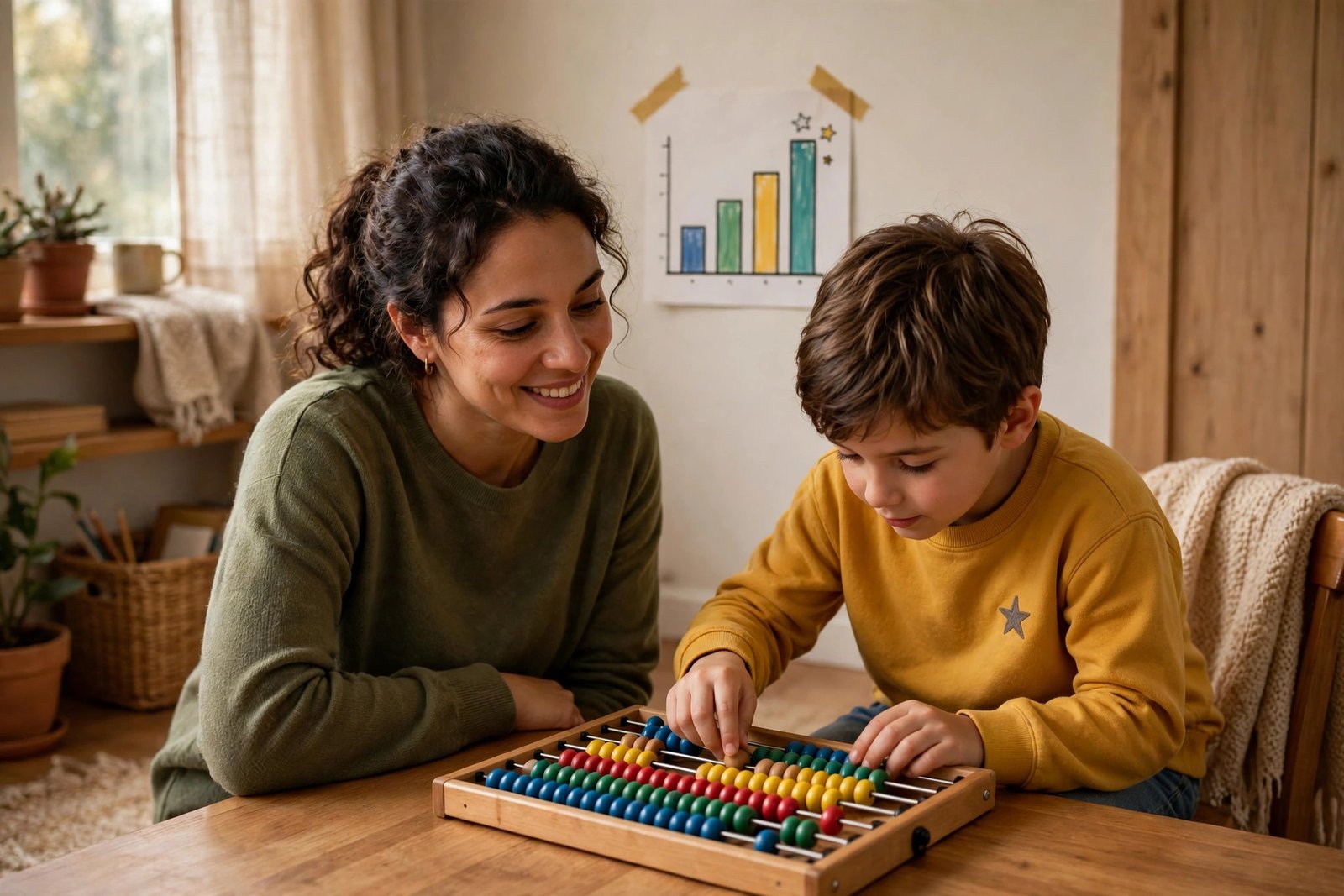
Make progress visible. A simple chart on the wall, a jar that gains a marble for each completed session, or a list of mastered skills with dates all turn invisible effort into something a child can see and touch. When motivation dips, that record quietly argues back: look how much you have already done. You have been stuck before and got through it.
Understanding the bigger map still has value for parents. Knowing the stages described in abacus levels explained helps you judge how far your child has come and what comes next, so your encouragement is informed and your expectations stay realistic. Share the map with your child in simple terms, but keep the daily focus on the next small step, not the distant summit.
Praise Effort and Strategy, Not Just Results
What adults praise teaches children what adults value. If praise only follows correct answers and fast times, children learn that mistakes are shameful and speed is everything, and they start avoiding hard work that might expose them. If praise follows effort, persistence, and good strategies, children learn that those are the things that matter, and they become more willing to attempt difficult sums.
Be specific. You kept checking each column even when the sum got long, or you noticed your own mistake and fixed it without help, tells a child exactly which behaviour to repeat. Compare your child only with their past self: last month these sums needed my help, and today you did them alone. That comparison is always available, always fair, and always encouraging.
Avoid empty superlatives and labels like genius or maths star. They feel good for a moment but create pressure to protect the label, which makes children cautious. Warm, honest recognition of real effort is steadier fuel, and children can tell the difference between praise that is earned and praise that is automatic.
Add Variety Before Adding Pressure
When practice feels stale, change the format before increasing the amount. Alternate worksheet days with game days. Let your child practise standing at a table, sitting on the floor, or teaching a toy pupil. Use real numbers from shopping, birthdays, and sports scores instead of printed sums for a session. Novelty refreshes attention without lowering standards, because the underlying skills stay the same.
The games in fun abacus games for kids are designed exactly for this purpose, turning the same addition, subtraction, and place value work into play. Many families find that one game-based session each week is enough to carry motivation through the more ordinary sessions around it. Letting your child choose the game adds a sense of control, which itself supports motivation.
Choice works elsewhere too. Offer bounded choices: practise before or after dinner, start with addition or subtraction today, use the blue abacus or the wooden one. These small decisions cost nothing and give children ownership of the routine. A child who helped shape the session resists it far less than a child who feels it is entirely imposed.
Break Hard Steps Into Kinder Steps
Sometimes motivation collapses because a step is simply too big. A child who managed single-column addition last week may freeze when carrying arrives in every sum. The fix is to shrink the step, not to push harder. Practise carrying with the smallest possible numbers. Do two sums together slowly, talking through each move. Then let the child try one with you watching silently, ready to help only if asked.
Success rebuilds motivation faster than any speech. Engineer small wins deliberately: start each session with a few sums your child can definitely do, move to the hard step while confidence is warm, and finish with something enjoyable. This sandwich structure means sessions begin and end well, and the difficult middle feels survivable.
If a step stays stuck for more than a week or two despite smaller steps, talk to the teacher if your child attends a class, or revisit the earlier material the step depends on. Guidance on common abacus mistakes beginners make can reveal that the real problem is an old habit, such as a finger movement that was never quite secure. Fixing the root cause restores progress, and progress restores motivation.
Keep Sessions Short and End on a Win
Long sessions are motivation’s enemy. A child who dreads forty minutes will negotiate, stall, and rush. The same child often accepts ten minutes without complaint, especially when the end time is reliable. Protect a predictable daily abacus practice routine built on short sessions, and honour the finishing time even when the work is going well. Trust in the routine’s limits makes starting easier every day.
End on a win whenever you can. If the last sum of a hard set went wrong, do one easier sum together so the session closes with success. Children remember endings disproportionately. A session that ends with I did it sends them away willing to return. A session that ends in tears over the final sum colours the whole memory of practice, however good the earlier part was.
On genuinely bad days, a two-minute session or a complete rest, given without guilt, can be the most motivating choice of all. It tells your child that their feelings matter and that practice is a partnership, not a punishment. The habit survives because it bends instead of breaking.
Handle Comparisons, Rewards, and Pressure Carefully
Comparisons creep in easily: a sibling who learned faster, a classmate with a trophy, a cousin in another programme. Resist them out loud, even if you think them privately. Children hear comparison as a verdict on their worth, and it rarely produces effort. It produces either anxiety or quiet giving up. Replace it with the only comparison that helps, the child’s own earlier work.
Rewards need the same care. Small celebrations of milestones, a chosen family activity, a certificate you make together, can mark achievements warmly. But paying for practice, in treats or money, teaches children that abacus work is unpleasant labour that must be compensated, and motivation often collapses when the payment stops. Celebrate progress; do not purchase compliance.
Watch your own pressure too. Parents invest money and hope in classes, and disappointment can leak into tone. If you notice practice becoming a daily conflict, pause and reset together: talk about what is working, agree one change, and start fresh. A calm parent is the single strongest motivational tool a child has.
Connect Practice to Things Your Child Cares About
Children persist at skills they see a point in. Help your child notice their abacus ability working in real life: working out change, keeping score in a family game, helping a younger sibling count, or finishing school homework more calmly. Name these moments when they happen. Each one is evidence that practice is building something useful, not just filling a workbook.
Some children are motivated by mastery itself, others by performing for an audience, others by gentle competition with their own records. Learn which fuel your child runs on and feed that one. A child who loves an audience might demonstrate a new skill to grandparents. A child who loves records might keep a personal-best chart. A child who loves mastery might enjoy learning how a new step connects to multiplication on the abacus waiting ahead of them.
Competitions and exams, where available, motivate some children strongly and worry others. Treat them as optional opportunities, never obligations, and decide together. A child who chooses a challenge and prepares for it gains from the experience whatever the result. A child forced into one gains mostly stress.
When to Rest, When to Adjust, and When to Seek Help
Not every dip needs a strategy. Sometimes a child needs a holiday, a lighter month during a busy school term, or permission to pause while another interest takes centre stage. A planned pause with a gentle restart date is not quitting. It is pacing, and many children return from it with renewed energy and skills that have quietly settled in the meantime.
Adjust the level if the dip persists. Work that is constantly too hard erodes confidence, and work that is constantly too easy bores. The right level feels challenging but doable with effort. If you cannot find that level at home, a teacher’s assessment can recalibrate quickly, which is one reason choosing support carefully matters for long-term motivation as well as for teaching quality.
Seek extra support if your child shows persistent distress around numbers in general, not just around practice sessions. Talk with their school teacher about what they observe in class. Occasionally, an underlying difficulty with numbers needs specific help, and getting that help early is an act of care, not a failure of motivation strategies. Most dips, though, are ordinary weather in the climate of learning, and they pass with patience, variety, and kindness.
A Word for Parents: Model the Attitude You Want
Children borrow their attitudes from the adults around them. If you describe your own school maths with dread, joke that your family is simply not a maths family, or treat practice as a chore to survive, your child absorbs that story. If instead you show curiosity about numbers, admit your own mistakes cheerfully, and treat hard problems as interesting rather than threatening, your child absorbs that instead.
You do not need to be a maths expert to do this. You need to be a steady companion: present at practice, patient with mistakes, honest about progress, and willing to keep going through a hard patch without panic. That steadiness is what children remember years later, long after they have forgotten individual sums.
Conclusion
Keeping a child motivated when abacus practice gets hard rests on small, kind, consistent choices: find the real reason for the dip, set small visible goals, praise effort and strategy, vary the format, break hard steps down, keep sessions short and end on a win, and avoid comparisons and payment-style rewards. Motivation handled this way does more than protect abacus progress. It teaches your child that hard stages are survivable, that effort works, and that they can trust themselves to keep learning, in maths and far beyond it.